
Lattice LC4256V-75FTN256BI: A Comprehensive Technical Overview of the CPLD for High-Performance System Design
The Lattice LC4256V-75FTN256BI represents a pivotal component in the realm of Complex Programmable Logic Devices (CPLDs), engineered to address the demanding requirements of modern high-performance digital systems. As a member of Lattice Semiconductor's high-density ispMACH® 4000ZE family, this device combines a robust architecture with low-power operation, making it an ideal choice for a wide array of applications, from communication infrastructure and industrial control to automotive and consumer electronics.
Architectural Prowess and Core Features
At the heart of the LC4256V-75FTN256BI lies a sophisticated macrocell-based architecture. It features 256 macrocells, organized into multiple Function Blocks interconnected by a high-speed, global routing pool. This structure ensures predictable timing and simplified design implementation. Each macrocell can be independently configured for combinatorial or registered logic operations, providing designers with exceptional flexibility.
A key attribute of this CPLD is its non-volatile, in-system programmable (isp) technology. Based on CMOS process technology, it offers significant advantages over competing devices. The non-volatile nature means the configuration is retained upon power-down, eliminating the need for an external boot PROM. Furthermore, the isp capability allows for rapid design iterations and field upgrades via a standard JTAG (IEEE 1149.1) interface, drastically reducing development time and cost.
Performance and Power Efficiency
The `-75` in its part number denotes a pin-to-pin logic propagation delay of 7.5 ns, enabling high-speed operation critical for performance-sensitive designs. This speed ensures that the device can efficiently handle complex state machines, fast address decoding, and intricate glue logic without becoming a system bottleneck.
Equally important is its focus on power management. Fabricated with a low-power advanced CMOS process, the LC4256V-75FTN256BI operates at a core voltage of 3.3V with 5V tolerant I/Os. It incorporates innovative features like ispMACH 4000ZE's "Zero-Power" technology, which minimizes static power consumption. This makes it exceptionally suitable for portable and battery-operated applications where power dissipation is a primary concern.
Package and I/O Capabilities
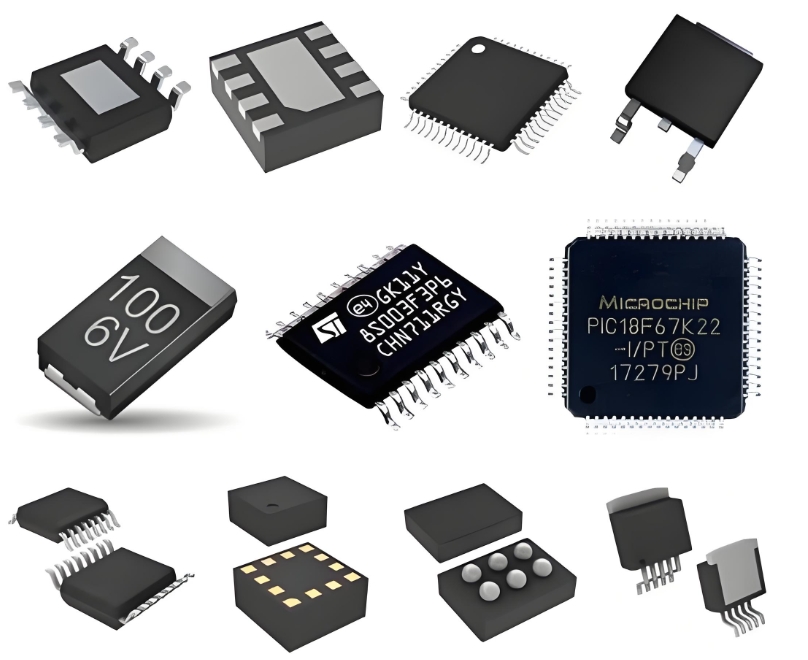
The device is offered in a fine-pitch 256-ball Fine-Pitch Ball Grid Array (ftBGA) package (FTN256). This compact package is essential for space-constrained PCB designs while providing a high number of user I/O pins. The I/O banks are highly versatile, supporting various single-ended I/O standards such as LVCMOS 3.3V/2.5V/1.8V and LVTTL. This flexibility allows for seamless interfacing with a broad spectrum of other components, from legacy microprocessors to modern ASICs and FPGAs.
Design Security and Reliability
Security of intellectual property (IP) is paramount. The LC4256V-75FTN256BI provides robust security features to prevent unauthorized access to the programmed configuration. Its programmable security bit effectively locks the design within the device, protecting valuable IP from cloning and reverse engineering. Furthermore, its architecture is inherently immune to configuration upsets caused by external noise, a common issue in volatile SRAM-based FPGAs, ensuring high system reliability.
Target Applications
This CPLD excels in roles that require fast, deterministic logic and control functions. Its primary applications include:
Bus bridging and interface logic (e.g., PCI to local bus).
Power-on sequencing and system configuration management in larger FPGA-based systems.
Data path control and signal grooming in communication equipment.
Efficient implementation of complex state machines and glue logic that consolidate multiple discrete logic devices into a single, reprogrammable chip.
ICGOOODFIND
The Lattice LC4256V-75FTN256BI stands as a highly capable and efficient CPLD solution, striking an optimal balance between high performance, low power consumption, and design flexibility. Its non-volatile nature, deterministic timing, and advanced packaging make it a superior choice for designers aiming to enhance system integration, reduce power, and accelerate development cycles in today's complex electronic systems.
Keywords: CPLD, Non-Volatile, High-Performance, Low-Power, In-System Programmable (isp)

